Sunday, 27 March 2011

The Birth of Facebook

The Social Network
Released: 
4 October 2010
Directed by: 
David Fincher
Produced by:
Scott Rubi
Dana Brunetti
Michael De Lunca
Seán Chaffin 
Written by: 
Aaron Sorkin
Based on the book ‘The Accidental Billionaires’ by Ben Mezrich 
Starring: 
Jesse Eisenberg
Andrew Garfield
Justin Timberlake
Armie Hammer 
Max Minghella 

Summary: Mark Zuckerburg (Jesse Eisenberg) is a computer geek with next to no friends. Aiming to get revenge on his girlfriend for breaking up with him, he creates a website, involving comparison of girls - which then leads to the idea of ‘The Facebook’ (later known as ‘Facebook’). Originally just for university students, the site becomes a huge success across the world, with the help of Sean Parker - creator of ‘Napster’. However, there are legal complications as Cameron and Tyler Winklevoss and Divya Narendra argue that Mark stole the idea from them. If one legal case was not bad enough, Mark’s former best friend and co-founder of Facebook is  also suing him, after his shares were massively diluted. ‘The Social Network’ follows the lawsuits and the amazing story of how Facebook was created. 
My Favourite Scene: Without a doubt my favourite scene is when Mark’s best friend (not so much at the time, but before the success of Facebook) Eduardo travels to California ready for an exciting meeting and a party for reaching one million Facebook users. However neither of these events happen. Instead he arrives and is told that, due to new share holders, his shares have been diluted down to .03 %. None of the other co-founders of Facebook had their shares diluted - shown in the scene where his lawyer asks four consecutive times how much the other founders’ shares were decreased by. My favourite moment in this scene is when Sean Parker tells Eduardo that Mark is ‘wired in’, meaning that he is too involved in Facebook to talk to him. But, in anger, Eduardo picks up the laptop and smashes it against the desk saying ‘What about now? Are you wired in now?’ Implying that he will finally have Mark’s attention. 
The discussion leads to Eduardo realising everything was about his success in the Phoenix and he believes that Mark was even behind the animal cruelty story involving him. Sean Parker also tells Eduardo that he should ‘check again’ about his name being on the masthead - conveying how he and Mark were attempting to permanently disregard his involvement with the creation of Facebook. I felt this argument was excruciating because it showed just how easily Mark had abandoned his friendship with Eduardo - who had been loyal to him from the beginning. 
My Favourite Quotes: 
Erica Albright: The Internet's not written in pencil, Mark.  It's written in ink. 

Sean Parker: We lived on farms, then we lived in cities, and now we're going to live on the internet! 

Marylin Delpy: Bolivia. They don't have roads, but they have Facebook. 

My Thoughts: I really enjoyed this film. It was very interesting to see how the idea of Facebook had evolved from comparing the ‘hotness’ of girls online. I found myself having mixed feelings for many of the characters - especially Mark. He was easily dislikable due to his selfishness and the way he treated the girl who broke up with him in the first scene. However, it was difficult not to laugh at his quick-witted comments, like “The rest of my attention is back at the offices of Facebook, where my colleagues and I are doing things that no one in this room, including and especially your clients, are intellectually or creatively capable of doing. Did I adequately answer your condescending question?” It was also impossible not to appreciate him creating such a hugely successful website, but also, how he knew what was necessary for its success.
A reason why I particularly enjoyed ‘The Social Network’ was because it is a true story. The idea that a young man could invent a website which now has over 300 milli0n members is quite incredible. I use Facebook nearly everyday, and it occurred to me as I was watching the film how big a part it plays in some people’s lives - whether that be a good or bad thing. The phrase ‘Facebook me’ has become commonplace, and as shown in the film, people can live their lives on the internet.
I loved the ending of the film. Instead of anything too dramatic, it ends with a woman who was present at the hearings, Marylin Delpy, telling Mark that he’s not an asshole, but ‘just trying so hard to be’. He then goes onto Facebook and adds her as a friend. He keeps refreshing the page just to check if she has accepted, despite only seeing her a few minutes ago. I think this is a nice ending because it shows that despite the success of Facebook, he is still a loser - searching for a friend.
Although I really enjoyed this film, I was slightly confused as to why it gained 8 oscar nominations. It was very watchable, the characters were good and the script was relatively entertaining, but I do not think it was oscar-worthy - which is probably why it did not win any! I am also, after doing some research, doubtful as to how much of the film is factually correct. However, this is an excellent film for a easy watch and definitely a must-see for Facebook-addicts, but nothing profound or oscar-worthy. 
A-

Wednesday, 19 January 2011

One choice. A lifetime of consequences.

Sophie’s Choice

Released:
December 8, 1982

Directed by:
Alan J. Pakula

Produced by:
Alan J. Pakula
Keith Barish
William C. Gerrity
Martin Starger

Written by: 
Alan J. Pakula
Based on the novel by William Styron

Starring:  
Meryl Streep
Kevin Kline
Peter MacNicol

Summary: Sophie is a Polish Nazi concentration camp survivor, who is saved and falls in love with unpredictable Biologist Nathan – who is obsessed with the holocaust. They becomes friends with Stingo (the narrator), a young American writer who moves into the apartment below them. As the film progresses, Sophie begins to trust Stingo by opening up to him about the past which haunts her.  The film follows Sophie, Nathan and Stingo’s relationships, as well as the traumatic repercussions of experiencing the horrors of a concentration camp. The film sees the consequences of a choice Sophie was forced to make, to keep one of her children and let the other die.

My Favourite Scene: One of the scenes I found particularly powerful, was at the end when Stingo returns to the house and realises what has happened.  When he walks into the bedroom he sees Sophie and Nathan, two tortured souls, lying in each other’s arms, dead. It is a peaceful end with He then takes the Emily Dickinson book and reads the poem “Ample make this bed” to them. This moment sees Stingo crushed by the death of the two most important people in his life. The hope that Stingo had of him and Sophie having any future together is gone.  In the end, everything that Stingo offered Sophie was not enough, as she could not escape the horrors of her past, and so made the choice of going to Nathan – which she knew would result in her death.

My Favourite Quotes:
Sophie: (In reply Stingo asking ‘you were sent to Auschwitz for stealing ham?’) No, I was sent to Auschwitz because they saw that I was afraid.

Nathan Laudau: Don’t you see, Sophie? We’re dying.

Stingo: I saw the first rays of daylight reflected in the murky river. This was not judgment day. Only morning: excellent and fair.   
My Thoughts:
I was really impressed by Meryl Streep’s portrayal of Sophie – which earned her an Oscar. The Polish accent was very good and I felt that she really put everything into Sophie’s story and her feelings. The scene where Sophie was sat by the window recalling her memories and sharing them with Stingo was really moving and I think Streep deeply connected with the role. I don’t think that it is necessary to explain how powerful her performance was in the ‘choice’ scene. This was the unthinkable choice that every person would find impossible: choosing which of her children should live, and which should die. This dreadful moment in Sophie’s past led to her issues about having a family with Stingo. She was a very complicated and delicate character. The film sees pieces of her past unfolding as she shares them with Stingo.

There was an interesting theme of trust and lies in ‘Sophie’s Choice’. Sophie trusting Stingo with her secrets, Nathan’s paranoia meaning he does not trust Stingo and also Sophie’s trust for Nathan – she had no idea who he really was. If trust is important in the film, so is lying. Firstly, Sophie lies about her father being an anti-Semite. This was a lie that led to the pivotal moment in the film when Stingo confronts Sophie and she reveals the truth about her time at the Nazi concentration camp. At the end of the scene she falls into his arms crying. The audience is given the possibility, since the film is seen those Stingo’s eyes, that he will save her and they will be together. However, she cannot bring herself to leave Nathan – who I think she felt completed her in some way and she was not strong enough without him.

Another lie was Nathan’s life as a biologist. There is a scene where Sophie and Nathan were sitting by the river and Nathan ran up to them excitedly saying that he and his team were close to a breakthrough at work. At this point I realised something was not quite right with Nathan. One moment, he was extremely happy and dressing up in ridiculous outfits, the next he was shouting at Sophie saying “I need you like death!” This was sad because Sophie trusted him and he had led a completely different life than she had thought.

Sophie’s Choice is beyond through-provoking. The audience can feel Sophie’s pain in the scenes where she is talking about her past. After everything that had happened, I was hoping for some happiness for her and, on reflection, I think her death portrayed that she was finally at peace with herself and her memories. ‘Sophie’s Choice’ is incredibly moving and powerful, but I will not be watching it again for a while – it was far too emotionally draining!
A

Wednesday, 22 December 2010

My Top 5 Christmas Films

Christmas is fast approaching. The lights and decorations are up, every shop seems to be filled with gifts and the famous Coca-cola advert is constantly on TV. So I decided it was time to do a Christmas-related post. These are my five favourite family films to watch at Christmas time.

1. Home Alone
How can anyone not love this film? The story of a young boy called Kevin who is accidently abandoned when his family goes on holiday. When he realises his home is going to be targeted by burglars, he sets a number of traps to catch them. Home Alone is, without a doubt, the Christmas film.

2. Miracle on 34th Street (1994)
I have to say that I enjoyed this film more when I believed in Father Christmas (which was about 10 years ago!). Six-year-old Susan does not believe in Father Christmas but when her mother employs Kris Kringle to work as Santa Claus in a department store, Susan starts to reconsider the possibility that the myth is real. This is a very enjoyable family film.

3. A Christmas Carol (1999)
This is the perfect film to watch and reflect upon. Charles Dickens’ messages about the way we behave, the consequences of our actions and, most importantly, helping those who are less fortunate, are definitely things to think about over Christmas. I love this film, as it is both entertaining and thought-provoking.  

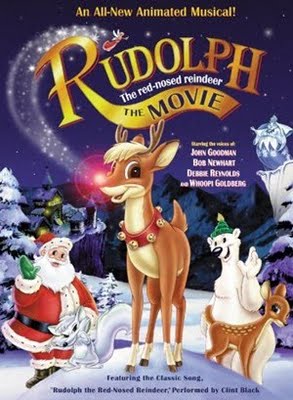
4. Rudolf the Red-Nosed Reindeer: The Movie
I watched this film every Christmas for about 5 years. Rudolf is not like other reindeers, he has a red nose. Rudolf is bullied by his peers for being different. But this film shows him becoming Santa’s most famous Reindeer! It’s obviously one for younger children, but I still love it because it’s just so humorous and holds so many memoires for me.


5. Planes, Trains and Automobiles
Although this is not actually about Christmas itself (it’s about Thanksgiving), it still has that Christmassy feel to it. It’s about the importance of family being together and the lengths that people will go to, to make that happen. The film has one of my favourite film moments of all time. The scene where the two are trying to sleep in the hotel room and Neal finally cracks. This leads to Del’s “You wanna hurt me?” speech – which always brings tears to my eyes.

Sunday, 7 November 2010

Two days, one family, half a van

Little Miss Sunshine 
Released:
July 26, 2006

Directed by:
Jonathan Dayton
Valerie Faris
Produced by:
Albert Berger
David T. Friendly
Peter Saraf
Marc Turtletaub
Ron Yerxa
Written by: 
Michael Arndt
Starring:  
Grey Kinnear
Toni Collette
Abigail Breslin
Steve Carell
Paul Dano
Alan Arkin
Summary: Seven-year-old Olive Hooper dreams of winning the ‘Little Miss Sunshine’ beauty pageant. To achieve this, Richard and Sheryl Hooper, along with her suicidal brother, Richard’s cocaine-addicted father and their son Dwayne (who has taken a vow of silence) decide to travel from Albuquerque to California in their rundown Volkswagen. However, they encounter a few problems on the way, including the news that the family is going bankrupt. During the dysfunctional family’s journey, they learn actually how important they are to each other. 

My Favourite Scene: During their journey, the Hoopers spend the night in a motel. The following morning they discover that Olive’s grandfather is dead. While in the mortuary, the Hoopers are told they cannot leave the body. Consequently, they decide to do something extremely unorthodox. They sneak the body through a window and put it in the boot of their car.
What I find so humourous about this scene is how the grandfather has not even been dead 24 hours and instead of grieving, they are carrying his body out of a window and placing it in the car! The underlying message in this scene is that regardless of the circumstances, the family would get Olive to the pageant on time. It demonstrates the ludicrous lengths that people would go to, to make their children happy. 
My Favourite Quotes:
Richard: Everyone, just... pretend to be normal. 
Dwayne: You know what? F*** beauty contests. Life is one f****** beauty contest after another.
My Thoughts: I love that this film is based around a classic American beauty pageant. At the end of the film, when they finally reach California, no-one (except for Sheryl) wants Olive to perform. I think this reflects how the family felt detached from society and its expectations. However, Olive performed anyway and her dance was not quite suitable. Eventually the whole Hooper family ended up on stage making fools of themselves - but it was a great scene, because it showed that they just did not care what anyone thought. Everything in the beauty pageant was so fake and the Hoopers realised that. Although they did not fit in with this world of glitter and makeup, they were happy. 
Another element which I thought made this film very strong was the contrast in the family between the beginning and the end. At the start of the film, each member of the family lived a very separate life. They were not connected, but by the end they were all dancing around on the stage - to the audience’s horror! The journey of ups and downs had brought them closer together. 
I enjoyed all the performances, but particularly Dano’s (Dwyane) and Carell’s(Frank). I was surprised to watch Carell playing such a role. His character was suicidal and humiliated, but the family’s eventful trip put a smile back on his face - and I think Carell pulled it off well.  There were plenty of cringe-worthy scenes. Calling Frank’s meeting in the petrol station uncomfortable would be something of an understatement...
I think by end I had felt every emotion under the sun. For each character, there were moments when I hated them, and moments when I loved them. This film is very original, which is something difficult to come by. The idea of a family taking a trip is so simple, but the clash in the characters’ personalities makes the film interesting and extremely funny. It is impossible for one to not have a smile on their face by the end of Little Miss Sunshine. It really is the ultimate feel-good film.  
A

Monday, 18 October 2010

Marley is no ordinary dog

Marley and Me
Released: 
December 25, 2008

Directed by: 
David Frankel

Produced by:
Gil Netter
Karen Rosenfelt

Written by: 
Scott Frank
Don Roos
(based on the autobiography
 by John Grogan)

Starring: 
Owen Wilson
Jennifer Aniston
Eric Dane
Kathleen Turner
Alan Arkin

Summary:  After Jennifer and John Grogan get married, they decide to move to Florida.  Worried about a baby being next on Jennifer’s ‘plan’, John attempts to stall this by buying her a puppy for her birthday. They choose to buy Marley – who is named while he and John are driving home listening to the reggae artist Bob Marley. However, Marley is no ordinary dog. When the Grogans are purchasing him, the owner says: “Boys are 275. Except for that little guy there. Him you could have for 200 even.” 

At this point it is obvious Marley is somehow different to most dogs. Marley is crazy, full of energy and lacks any self-discipline. His antics provide John with plenty of humorous stories for his column. Both Jennifer and John are writers, and while Jennifer decides to give up her work to look after her children, John searches for his perfect job. The Grogans soon have three children: Patrick, Connor and Colleen. This film follows the story of their family, John’s work and life with “the world’s worst dog.”
  My Favourite Scene:  One of the scenes I thought was the most interesting was when Jennifer fell pregnant. At nearly 10 weeks, she and John visited the hospital to have a scan. While the doctor is looking at the baby she leaves the room and returns with another doctor who, after checking, answers Jennifer’s question “Is there anything in there?” with “Not what you would expect to see at 10 weeks.”

I like this scene because I think in too many films that aim to reflect real life, couples easily have children. Jennifer suffers a miscarriage, which is a situation that many people will have experienced. The scenes that follow show the repercussions of the miscarriage. As they are driving home from the hospital, John says that they can try again in a few months, which is him trying to give her some form of comfort. However he later finds her stroking Marley in floods of tears. At this point he realised how much Jennifer was suffering. It was refreshing to see a real-life situation in this sort of film, which is why I chose it as my favourite scene.

My Favourite Quotes: 
John Grogan: A dog doesn't care if you're rich or poor, educated or illiterate, clever or dull. Give him your heart and he will give you his.

Jennifer Grogan: Hi guys, alright, say hello to Colleen!
Connor: Daddy says her name is whoops.

My Thoughts: The aim of this film is to make the audience both laugh and cry which, in my case, it did very successfully. An animal dying never fails to make me sob and there were numerous scenes where Marley’s insane behaviour had me in fits of laughter. I enjoyed both Wilson’s and Aniston’s performances, although I think Aniston has unfortunately reached the age where she cannot quite pull off being a 20-something newlywed!

The problem with this film is that everything was far too predicable. Once Jennifer suffered a miscarriage, it was only a matter of time before she became pregnant again. It was obvious once they agreed to have no more children, that another baby would soon come along and it was clear that John would end up becoming a columnist (despite him believing that he should be a reporter). There were no surprises, which I think is what makes a film interesting. To my disappointment, “Marley and Me” never made me think “wow. I did not expect that.”

Something I found particularly strange was John’s relationship with his children. He had a full time job which, of course, would take up a lot of his time - but it seemed throughout the film John never bonded with his children. There were plenty of scenes with Jennifer holding her children, but next to none of John. 

An element of his film which is quite worrying is how Marley ran wild around the house with three small children. It seemed very irresponsible, although Jennifer did mention once about Connor not sleeping and Patrick falling over due to Marley. I think that the safety issue of raising children with a dog like Marley was a subject that was not properly dealt with.

“Marley and Me” seemed to drag on. Every time I thought the film was coming to an end, it carried on! I thought that the scene where the Gorgans buried Marley was probably necessary for the film to come to a close, but it was still too clichéd. The film was supposed to portray real-life, but it was completely unrealistic - particularly John’s ability to convince his bosses to give him any sort of job he wanted! Overall, I found “Marley and Me” to be another predicable comedy, but it is still an enjoyable family film.
C+

Sunday, 10 October 2010

Love and death in Venice


Don’t Look Now 
Released: 
16 October 1973
Directed by: 
Nicholas Roeg
Produced by:
Peter Katz
Written by: 
Allan Scott
Chris Bryant
(story by Daphne du Maurier) 
Starring: 
Julie Christie
Donald Sutherland

Summary: After John and Laura Baxter’s daughter, Christine, dies tragically - they decide to take a break in Venice. While there, they meet Wendy and her sister Heather - who claims to be psychic. Heather tells Laura that her daughter is still with them. This intrigues Laura (who does not want to let go of Christine) but worries John - who is struggling to deal with Laura’s growing obsession of communicating with her daughter through Heather’s ‘powers’. John begins to see his dead daughter in Venice, wearing her red coat, but he never sees her face. He also sees things which don’t make sense and with a serial killer on the loose, John is unsure of who to trust. 
  
My Favourite Scene: At the beginning of the film, John is looking at a transparency with a magnifying glass, while Laura is reading. As this is happening, Christine is playing happily by the pond. The transparency shows the interior of a church with a seated figure wearing a red coat, like Christine’s. As he looks at it, he accidentally knocks a glass over the transparency. At that moment, Christine falls into the pond. A red shape (similar to blood) moves across the transparency from the red figure. John panics and, as if he knew what had happened, runs to the pond - only to find that Christine has drowned.
This is an excellent scene because both the figure in the photo and the real Christine are drowning. It also raises many questions, such as did John ‘kill’ Christine by knocking the glass over (causing the ‘blood’ to spread across the picture, representing Christine’s death)? Another thought is that John knew Christine was in danger the moment the glass hit the picture, even though she was playing outdoors, while he was indoors. It is hard to understand the scene at the time, but once the truth about John’s ability to foresee the future through his premonitions is revealed at the end of the film, everything makes sense.  
My Favourite Quotes: 
Laura Baxter: (talking to John about Heather) This one who's blind. She's the one that can see. 

Inspector Longhi: The skill of police artists is to make the living appear dead. 

My Thoughts: Don’t look now is an abstract and brilliant film. I think something important that the film conveys are the repercussions from the loss of a child. After Christine dies, the strain on the relationship between John and Laura is shown, as well as the lengths that they (especially Laura) will go to, to bring back their child. Laura wants to believe that anything is possible, whereas John is trying to be more practical and face the fact that his daughter is dead - however the film still sees him becoming obsessed by the red figure who looks like his daughter.  
Another important issue in the film is trust - at the beginning of the film, I felt that John and Laura’s relationship lacked any. However, as the film progressed, I saw that John was denying that his daughter was still alive to save Laura from any more pain - which I believe shows the love they have for each other.  Trust is also shown through Laura, when she visits the elderly women, knowing nothing about them but simply having the drive to see her daughter again. Towards the end of the film, I think John has less and less trust in people. He starts not to believe anything anyone tells him. 
The film’s plot was very interesting. Every time I thought I was sure of what was going to happen, something threw me off! There were so many twists and complications, it was difficult to piece it all together until the end, when John has his sudden realisation. 
This film would be categorised as a psychological thriller - however, throughout most of the film I was more intrigued than scared. The only moment I felt utterly terrified was when the red figure finally revealed itself in the famous end sequence. The scenes throughout the film were like pieces of a jigsaw that were not fully explained until the final scene. The combination of this, and the buildup of tension made for an extremely powerful ending.  
A*

Monday, 4 October 2010

Think again before you make fun of Carrie

Carrie (1976) 
Released: 
3 November, 1976 

Directed by: 
Brian De Palma

Produced by:
Brian De Palma

Written by: 
Lawrence D. Cohen
(based on a novel by
Stephen King)

Starring: 
Sissy Spacek
Piper Laurie
Betty Buckley
Amy Irving
William Katt
Nancy Allen
John Travolta 

Summary: Carrie White is an abused and bullied schoolgirl who discovers she has physic powers. When she realises she has the ability to move objects with her mind, she begins to use this against anyone making her angry. Her insane, god-fearing mother believes that everything Carrie does is a sin. Her punishment is being locked in a cupboard (with an extremely freaky Jesus ornament) and being made to pray for forgiveness. She is mistreated by her mother, teachers and friends (worst of all Chris) and this film witnesses her final revenge. 
  
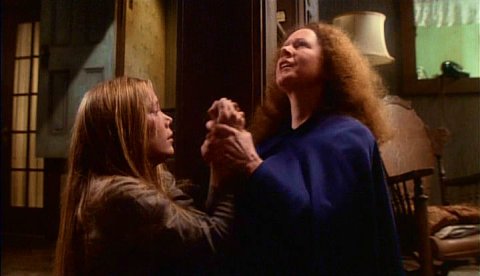
My Favourite Scene: I believe that the most effective scene in Carrie is at the end, where Sue (in a dream) visits the remains of Carrie’s house to lay some flowers. As she is laying the flowers on the ground, Carrie’s hand, covered in blood, reaches out and grabs Sue’s wrist. After this, Sue wakes up screaming and crying in her mother’s arms. 

I think this is very powerful because it illustrates the effect of what Carrie did. The audience expects the scene to be Sue’s peaceful goodbye to Carrie -  however the hand reaching out definitely changes that! I do not think I have ever been more scared in my life. I literally jumped out of my skin! The scene portrays that even though she is now dead, the bitterness of what Carrie did still lives on. 

My Favourite Quotes: 
Margaret White: Witch. Got Satan's power.
Carrie White: It has nothing to do with Satan, Mama. It's me. Me. If I concentrate hard enough, I can move things.

Margaret White: These are godless times, Mrs. Snell.
Mrs. Snell: I'll drink to that.
 
My Thoughts: This is an interesting and weird film. When it was released, it was innovative and many films using the same ideas as Carrie, followed in its footsteps. The ‘pig blood prom scene’ was especially inventive. The combination of split screen, lighting, music and Sissy Spacek’s performance made this scene incredibly effective. 
Brian De Palma originally wanted Sissy Spacek to play Chris (Carrie’s bully) but when she arrived for the final audition unwashed, wearing a dress her mother made her in the seventh grade and with vaseline rubbed into her hair  - De Palma realised he had found his Carrie. Spacek’s performance in the film was brilliant. She really captured the confused and awkward role of Carrie. She had a unique look and, even when covered in pig’s blood, she was beautiful.   

Carrie’s mother, Mrs. White, is insane. She is enormously religious and anything Carrie does ‘wrong’, results in her being placed in the cupboard. I think five minutes alone with that Jesus ornament is enough to make anyone seriously disturbed. For a while, I believed that Mrs. White did actually love her daughter, but was just hungry for control. However what she did when Carrie returned home from her prom made me change my mind! 
An element about this film I especially liked was the theme music. Instead of being dramatic like most classic horror films, it was simple and tranquil. I think this highlights the sadness about the film. Even after everything that Carrie had done, I still pitied her. She was just a misunderstood young girl. Moreover, I felt like (towards the end of the film) Carrie had hope. She was beginning to believe in herself. Tommy was being kind to her, as was Sue. Everyone was starting to accept Carrie, and that night, she was genuinely happy. 

I think an underlying message in this film is the effect of bullying. Carrie was a sweet girl who had good intentions, but she could only take so much. The girls were horrible to her, and while most learnt their lesson, Chris did not (but she got her comeuppance in the end). I was glad that Sue survived, because it seemed that besides Miss Collins, she was the only one who cared for Carrie in the end. She sacrificed her prom date with Tommy to let Carrie be happy. 

This film has certainly left its mark on horror film history and I think anyone who has seen it will think twice before they insult someone else, just in case they happen to be like Carrie.  
 A